

The Manual on Uniform Traffic Control Devices, or MUTCD, sets nationwide safety and regulatory standards for the installation of all traffic control devices on all streets, highways, bikeways, and private roads open to public travel.
Traffic control devices are critical to ensuring the safety and efficient transportation of people and goods on the nation’s roads. By setting minimum standards, the MUTCD provides necessary guidance. From the messaging, locations, sizes, shapes, and even colors, all of the required details – no matter how small – involved with traffic control are put in place to reduce crashes and traffic congestion.
MUTCD History
Published and administered by the Federal Highway Administration (FHWA) since 1971, the MUTCD is a compilation of all national roadway standards within the U.S. From road markings and highway signs to traffic signals, MUTCD standards are updated regularly to accommodate the evolution of transportation needs and to address new technologies to better improve safety, traffic control tools, and traffic management techniques.
The MUTCD is a dynamic document that changes with time to address contemporary safety and operational issues. The arrival of the automobile in the early 1900s started a revolution in travel, making the development of traffic control devices a necessity to keep roadway travelers moving safely and efficiently. Road signs were the first traffic control devices implemented on the nation’s roads, and the evolution of these signs alone has provided phenomenal insight not only into the traffic control devices across the board but also to the pace of economic and social development.
Interesting Early Traffic Control Developments
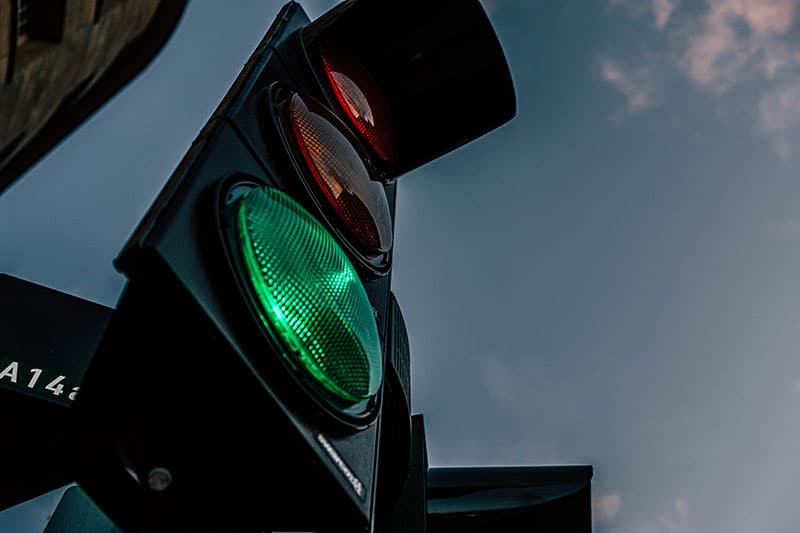
- In 1911, a centerline was painted on a road in Michigan.
- In 1914, Cleveland was the first city to install an electric traffic signal.
- In 1915, the first STOP sign appeared in Detroit.
- In 1916, the Federal-Aid Act required states to implement a highway department before receiving Federal funds.
- In 1918, Wisconsin was the first state to erect official route signs as part of maintenance functions.
- In 1920, the city of Detroit was the first to install the first 3-color traffic signal.
Who Uses the MUTCD?

Those who use the MUTCD on road and highway projects includes, but is not limited to:
- state and local highway agencies
- public officials
- those owning private roads open to public travel
- insurance companies
- law enforcement
- incident management personnel and agencies
- academic institutions
- officials within the private industry
- construction and engineering organizations
The most obvious and frequent users of the MUTCD are those within the public sector – both state and local transportation planners and traffic engineers. Owners of private roads open to public travel – such as shopping centers, theme parks, airports, sports arenas, etc. – also rely heavily on the MUTCD to assure that their privately owned roads are safe and efficient with messaging consistent to those on highways and public roads.
Others in the private sector, including contractors for both construction and engineering companies who design and build the roads, also rely on the MUTCD. A variety of businesses that design, test, manufacture, and market traffic control devices for application and installation before they are distributed throughout the United States also utilize the MUTCD.
Organizations within law enforcement also use the MUTCD as they monitor driver behavior and perform investigations with traffic incidents. Finally, insurance and legal communities frequently refer to the MUTCD in their investigations into claims or legal proceedings that arise from traffic-related incidents.
Interwest Safety Supply and the MUTCD
The MUTCD is a valuable reference tool for any industry involved with roads and highways. Having effective traffic control devices that reliably meet these standards is vital to both the efficiency and safety of road and highway travel for us all.
Every product we offer is in accordance with FHWA and the MUTCD standards they publish. For over 40 years, we have worked closely with state, local, and private industries to ensure the safety of roadways across the nation at Interwest Safety Supply.
Contact one of our experts today!
References: